Watercolor Red Flower Tumbler Full Wrap
A Designer’s First Glance: Soft, Bold, and Unexpectedly Versatile
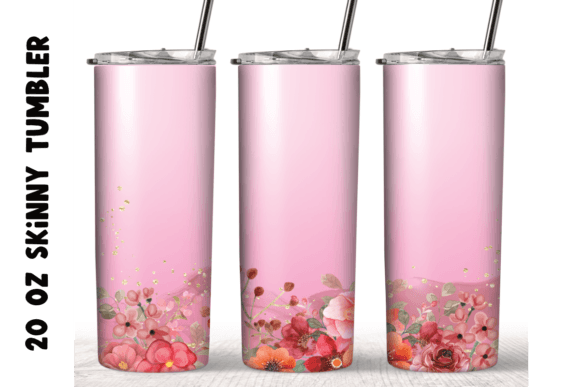
When I opened the Watercolor Red Flower Tumbler Full Wrap, I didn’t see just another floral graphic—I saw a mood. The soft bleeding edges, the subtle granulation in the petals, and that rich, warm red (not candy-bright, not dusty—just alive) immediately suggested something handmade, intentional, and quietly confident. It’s not fussy or over-rendered. There’s breathing room in the composition, and the tapering layout—designed for a 20 oz skinny tumbler—means the design naturally curves with intention. That’s rare. Most “tumbler wrap” graphics feel like flattened rectangles forced onto curved surfaces. This one feels like it was born for contour.
From Sublimation File to Embroidery Reality: What Translates—and What Doesn’t
Here’s the honest truth: Watercolor Red Flower Tumbler Full Wrap is marketed for sublimation—but as an embroidery designer who regularly adapts digital graphics for stitch, I tested it on a custom embroidered tote bag last week. Why? Because so many craft business owners (Etsy sellers, boutique makers, small shop product developers) are asking: *Can I use this as embroidery source art?* The answer is yes—but with thoughtful translation.
The tapered PNG gives you clear visual hierarchy: the bloom anchors the center, leaves flow outward, and negative space stays generous. That’s gold for embroidery. You can easily trace it into a clean vector outline for an applique design—or simplify it into layered fill stitch zones for a satin-stitch-centered interpretation. I used it as the focal motif on a linen tea towel: digitized the main flower as a medium-density fill stitch, kept the leaves as lighter-weight running stitch accents, and added a single satin-stitched stem. Customers commented on how “soft” and “natural” it looked—not stiff or pixelated. That’s the watercolor sensibility holding up under thread.
Where It Shines (and Where It Needs Extra Care)
- Best for: Sweatshirt embroidery (left-chest or back panel), embroidered pillow covers, baby onesie accents (scaled down), apron front panels, and holiday gift totes. Its organic shape softens structured items beautifully.
- Use carefully on: Stretchy fabric (like jersey knits)—the tapering lines need stable tension, so double-layer stabilizer is non-negotiable. Also avoid dense stitch builds in the petal centers on thin fabrics; the original watercolor softness reads best when stitch density stays moderate.
- Not ideal for: Tiny hoop sizes (under 4x4”), caps with tight curvature, or dark fabric without high-contrast thread selection. The subtlety of the watercolor fade gets lost if thread colors lack tonal range.
Real Project Moment: A Boutique Baby Gift Bundle
Last month, I built a small-batch baby gift set for a local boutique: a muslin swaddle, organic cotton onesie, and matching burp cloth. I used a simplified version of Watercolor Red Flower Tumbler Full Wrap as the embroidery motif—scaled to 3.2 inches wide, digitized with open-fill stitches and gentle satin outlines. On ivory fabric with burgundy and sage thread, it read as gentle, botanical, and deeply handmade. Parents responded strongly to its quiet elegance—not “cute,” but *considered*. That’s the value: this design supports brand consistency for shops that prioritize calm, quality, and tactile warmth over trend-chasing.
What It Adds to Your Craft Business (Beyond the Stitch)
As a digital product seller and embroidery reviewer, I pay attention to how a design affects buyer trust and perceived value. Watercolor Red Flower Tumbler Full Wrap elevates finished products because it avoids clip-art flatness. When customers see that bloom on a custom sweatshirt or kitchen towel, they don’t think “downloaded graphic”—they think “designed with care.” That perception translates directly to pricing confidence, repeat orders, and social shares. For Etsy sellers, it works especially well in printable mockups: the tapered layout previews beautifully on tumbler templates, making listings feel cohesive and professional—even before stitching begins.
Practical Designer Notes Before You Stitch
- Always test on scrap fabric first—especially to assess how the tapered edges behave on your chosen stabilizer/fabric combo.
- Review thread color contrast on both light and dark backgrounds. The watercolor effect relies on tonal gradation, not hard edges.
- Check stitch density if digitizing from the PNG. Avoid overloading petal centers; let the watercolor illusion live in spacing and layering, not fill weight.
- Confirm hoop size compatibility—while the template is 9.3 x 8.2 inches, your final embroidery file may require repositioning or scaling depending on garment placement.
- Inspect small details in black-and-white mockups. Does the shape hold legibility without color? If yes, it’ll translate cleanly across fabric types.
- Verify licensing before selling finished items or bundling the PNG as part of a commercial embroidery kit. This is a Graphics asset—not a pre-digitized machine embroidery design—so usage rights matter for craft business use.
Final Thought: A Quiet Anchor in a Busy Creative Practice
In my studio, I keep a short list of design assets that reliably ground a project—pieces that say something meaningful without shouting. Watercolor Red Flower Tumbler Full Wrap belongs there. It’s not flashy. It doesn’t demand attention. But it earns it: through thoughtful proportion, emotional resonance, and real-world adaptability across tote bags, baby items, holiday gifts, and small shop merchandise. Whether you’re an embroidery designer sourcing inspiration, an Etsy seller building a signature look, or a hobbyist stitching a personalized gift, this is one of those rare Crafts assets that feels like a collaboration—not just a download.